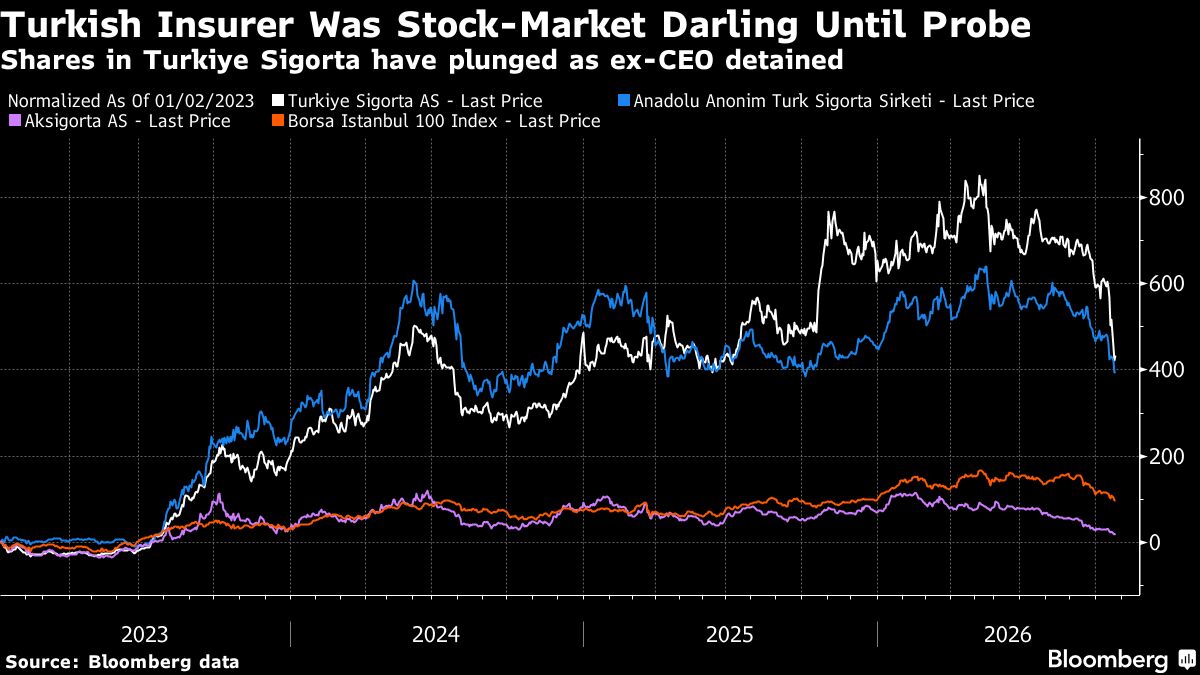
Turkiye Sigorta has lost more than 40% of its market value since September as arrests, leadership changes and delayed results weigh on its shares.
Leadership upheaval meets market scrutiny
Turkiye Sigorta AS has lost more than 40% of its market value since September, with fresh arrests tied to a Turkish fund probe deepening pressure on the state-backed insurer. Its shares fell 18% over two days to their lowest level in nearly two years after reports that Chief Executive Taha Cakmak and deputy Gurol Sami Ozer had been arrested. The decline puts a sharp market reaction alongside a developing investigation, though the available information doesn’t establish that the company itself has been accused of wrongdoing.
The company announced Cakmak’s resignation on Oct. 15, then postponed third-quarter results that had been due Oct. 19. On Monday, its board said Ozer was also being dismissed. For investors, the sequence raises practical questions about who’s directing the business, how decisions are being made, and when the company will provide its delayed financial update. Those questions carry more weight when senior executives are facing an investigation, even as the allegations remain allegations.
Since Cakmak took the helm in 2023, Turkiye Sigorta’s shares rose more than 500% through a May peak, outperforming almost all constituents of the Borsa Istanbul 100 Index. The subsequent decline has erased a substantial portion of those gains. That reversal is striking, but the earlier rise matters too: a fall from a steeply elevated level can look especially severe, and the price move alone doesn’t explain how much of the earlier rally reflected business performance, market conditions, or investor expectations.
Allegations and company exposure
Turkish broadcaster NTV reported, citing unnamed sources, that Turkiye Sigorta directed cash to funds managed by Tera Portfoy Yonetimi, a firm at the center of the fund crisis. Cakmak’s lawyer, Ersin Yucel, said his client denies wrongdoing and will appeal his arrest. Turkiye Sigorta did not respond to repeated requests for comment. The sourcing and the company’s lack of response leave important details unresolved, including the nature of the reported cash flows and what role, if any, the insurer may have played in the alleged activity.
The investigation concerns allegations that investment funds bought shares in relatively obscure companies and drove their prices sharply higher. Justice Minister Akin Gurlek said in a social media post this month that 88 suspects had been arrested. Cakmak and Ozer are among a growing number of prominent figures from Turkey’s financial sector detained as prosecutors investigate the alleged scheme. Those arrests show the inquiry’s reach, but they don’t by themselves establish the conduct or responsibility of any particular person or company.
In cases involving funds and share trading, the distinction between an institution’s exposure to a fund and participation in alleged misconduct matters. A reported cash allocation, a fund’s holdings, and an executive’s alleged actions are separate facts that require separate evidence. Here’s the thing: investors may react to the association before those details are clear, while the eventual significance for the insurer depends on facts that haven’t been established in the information available so far.
Turkiye Sigorta is based in Istanbul and is 76% owned by Turkey’s sovereign wealth fund, chaired by President Recep Tayyip Erdogan. The insurer was formed in 2020 by merging insurance subsidiaries of state-owned banks. It has since expanded rapidly and holds the largest share of Turkey’s insurance market, according to a company presentation dated Oct. 21. Its scale and public ownership make the episode more consequential for market confidence, but neither fact resolves the questions raised by the investigation.
Filings show that funds overseen by Tera Yatirim Menkul Degerler AS held Turkiye Sigorta shares, with at least some purchases made in August, shortly before the scandal emerged. That connection adds another point of market focus as the company navigates leadership changes and delayed financial reporting. It’s a relevant link, but a fund’s ownership of shares doesn’t, on its own, show that the insurer directed the purchases or knew of any alleged scheme. (And this is the part most people overlook.)
What investors will be watching
The postponed results are now central to the company’s near-term credibility with the market. Financial statements can give investors a clearer view of performance and provide a scheduled channel for management to address questions. Until the report is available, the delay leaves less information to balance the headlines and share-price moves. The timing also matters: a company facing executive departures and scrutiny over reported fund connections has a narrower margin for unclear communication.
If you’re working in this space, the distinction between operational strength and confidence in oversight deserves close attention. Turkiye Sigorta’s market position and rapid expansion describe the business it built; they don’t answer whether its controls were adequate or what the reported fund links mean. Those questions call for evidence from the company’s disclosures and the investigation, rather than conclusions drawn from the stock chart.
This is more significant than it looks. The shares’ fall is a market signal, not a verdict, and it can reflect uncertainty about leadership, reporting, and the investigation at the same time. Investors will have to judge each strand on its own as more information becomes available. For now, the unresolved details—and the company’s delayed financial update—are likely to keep attention on how Turkiye Sigorta explains its exposure and restores clarity around its management.
Uncertainty, with the burden of explanation now on the company.
Discussion
Sign in to join the discussion.