IMF Managing Director Kristalina Georgieva emphasizes the need for ethical frameworks and safeguards to mitigate AI's risks during recent discussions.
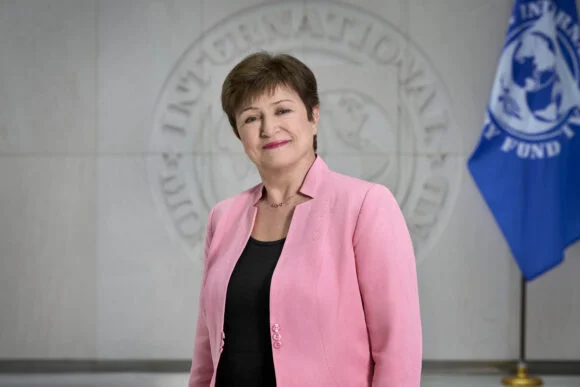
The International Monetary Fund (IMF) Managing Director, Kristalina Georgieva, recently expressed concerns that the perils associated with artificial intelligence (AI) could outweigh its advantages without a solid framework for ethics and safeguards in place. Speaking during a panel at the IMF-World Bank annual meetings in Bangkok, she underscored the importance of industry self-regulation, complemented by active engagement from key governments.
AI's impact on global economics was a central topic of discussion this week, particularly given the IMF's assessment of escalating growth and financial stability risks tied to the potential downturn in AI investment. Coupled with high debt levels and ongoing geopolitical tensions, especially in the Middle East, the IMF has raised alarms about the current financial ecosystem.
Balancing Opportunity and Risk
Georgieva acknowledged the dual nature of AI's influence, noting it could catalyze economic growth while simultaneously presenting risks if rapid productivity gains do not materialize. “If there are no safeguards, then the risks may exceed the opportunities,” she articulated, stressing the need for a cohesive ethical foundation to ensure that society is adequately prepared.
Supporting her view, Bundesbank President Joachim Nagel warned of potential global imbalances driven by the substantial investments necessitated by AI technologies. He pointed out that the significant capital influx required for both hardware and software development could exacerbate existing disparities.
Establishing Necessary Precedents
For AI to benefit all sections of society, Georgieva cited several prerequisites: equitable access to digital infrastructure, reliable electricity, and comprehensive regulatory measures. She likened the rapid evolution of AI to a high-speed race devoid of protective barriers, articulating a pressing need for defined guardrails.
The panel discussions emphasized that while industry-led initiatives could provide a framework, they should not circumvent societal engagement. Georgieva urged collaboration among nations housing substantial AI sectors, including the United States, China, and India, to solidify these guidelines.
Jack Clark, co-founder of Anthropic, humorously elaborated on Georgieva's analogy, emphasizing the chaotic nature of unchecked technological progress. He pointed out that early regulatory frameworks are emerging in the European Union and voluntary initiatives in the U.S., suggesting a path toward establishing essential standards.
Clark expressed his belief that a more structured approach to regulation is necessary, advocating for consistent standards that would strengthen public trust in AI technologies. He affirmed that while self-regulation is beneficial, comprehensive guidelines are essential to ensure confidence in AI's potential economic contributions.
The Uncertain Path Ahead
Economist Dani Rodrik highlighted the uncertain trajectory of AI's productivity benefits. The potential for substantial job displacements looms large if the promised advantages do not materialize, resulting in potential financial corrections driven by heavy investments in AI infrastructure.
“The question is whether we face a jobs crisis or a financial crisis,” Rodrik stated, referencing the pressing need for clarity on the economic implications of AI investments. His comments reflect a broader concern about the double-edged nature of the technological advancements on the horizon.
Shifting Perspectives on AI
Meanwhile, U.S. Treasury Undersecretary Erin Browne criticized the IMF's focus on risks, suggesting that it should also acknowledge the favorable economic shocks AI could bring, now termed "super intelligence" by the U.S. government in discussions with other IMF shareholders.
Despite differing opinions, the consensus appears to be leaning towards a more cautious and regulated approach to AI's integration into the global economy. Bank of England Governor Andrew Bailey expressed optimism about aligning on testing standards for AI, hinting at a collective move towards effective governance.
In a related panel, Federal Reserve Chair Kevin Warsh humorously noted the evolving terminologies surrounding AI, reflecting the broader conversation around its implications and perceptions.
(Reporting by Andrea Shalal and Maria Martinez; editing by John Mair and Susan Fenton)
Photo: IMF Managing Director, Kristalina Georgieva; IMF Photo/Kim Haughton
Discussion
Sign in to join the discussion.