DBRS Morningstar estimates French riot losses below €1.2 billion, while insurers await a public-private system to spread future claims.
Insured losses look manageable, but concentration matters
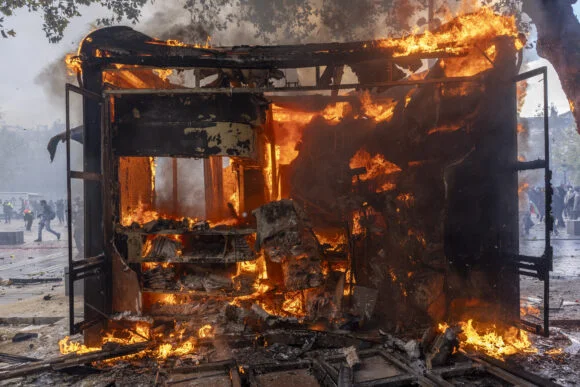
France’s latest wave of unrest offers a near-term test of how private insurance and reinsurance absorb widespread riot losses before a new public-private framework takes effect. DBRS Morningstar analysts Marcos Alvarez and Elisabeth Rudman estimate insured losses will stay below €1.2 billion ($1.3 billion). That would be a meaningful hit to property and casualty earnings, they say, but it’s unlikely to trigger a capital event or materially weaken major insurers’ credit profiles. The estimate is a forecast, though, and the eventual cost will depend on which claims are covered, how they’re assessed and how widely losses are spread across insurers.
For a carrier, the difference between a large loss and a destabilizing one often comes down to the balance sheet and the pattern of claims. Losses can be material to a reporting period without threatening the ability to meet obligations. That distinction matters here: DBRS Morningstar’s view is that the likely earnings pressure is real, while the broader credit consequences appear limited. The numbers here are underwhelming as a threat to major insurers’ solvency, but they still point to a costly episode for the affected businesses and the companies covering them.
Claims aggregation is the central risk
The pressure comes from correlated claims accumulating across commercial property, motor, government property and business interruption portfolios as unrest spreads between cities. A single damaged building can generate a discrete property claim; unrest across multiple locations can produce many claims at once, potentially involving different types of coverage. That clustering makes the total exposure harder to manage than the severity of any one incident. The analysts said riots increasingly resemble catastrophe risks, a trend they identified in 2023. For insurers, the scale and concentration of claims may matter more than the severity of any single loss.
More than 500,000 people joined protests across France on Saturday. Some demonstrations escalated into violence and looting, and Interior Ministry figures released late Sunday counted 2,397 arrests that day. The unrest has since eased. Those figures describe the scale and course of events, but they don’t establish how many incidents will result in insured claims or how much those claims will cost. Insurance losses depend on policy terms and reported damage as well as the reach of the unrest.
Business interruption adds another layer. When property damage disrupts a business, a policy may cover more than the physical repair, depending on its terms; assessing the resulting claim can take time. Motor and government property claims bring different questions about covered damage and loss allocation. (And this is the part most people overlook.) A broad event doesn’t create one uniform pool of claims: the wording and limits of individual policies shape who pays, and when.
New framework aims to spread future losses
France plans to introduce mandatory riot coverage within relevant property policies, backed by a loss-sharing mechanism supported by the French State and managed by CCR. Under the design described by DBRS Morningstar, insurers could transfer a substantial share of qualifying losses to the mechanism. The arrangement is intended to spread some extreme losses beyond individual insurers, while leaving the scope of coverage and the definition of qualifying losses central to how it works in practice.
The reform follows earlier severe unrest more than three years ago. Analysts said it reflects concern that repeated episodes could make riot coverage difficult or prohibitively expensive to provide through conventional insurance alone. Similar systems typically seek to keep coverage available by sharing losses across more than one source of capital. That can change how risk is distributed, but it doesn’t make the underlying damage disappear. Once in place, the framework is expected to reduce uncertainty over who bears extreme losses.
Until then, insurers remain dependent on private coverage, reinsurance and possible recourse to the state, which the analysts described as potentially contentious. The current unrest therefore tests both the reach of existing policies and how losses are distributed before the new arrangement begins. The transition matters: the planned mechanism may shape future claims, but it can’t settle the allocation of losses from an event occurring before it takes effect.
Insurers extend reporting windows
Finance Minister Roland Lescure met this week with insurers, business federations and banks, then announced support measures on Tuesday for directly affected businesses. AXA SA and BPCE Assurances have extended claim reporting deadlines to 30 days from the usual five. A longer reporting window gives policyholders more time to notify their insurers, which may help claims enter the process when businesses are dealing with disruption. It doesn’t, by itself, establish that a claim is covered or determine its value.
The measures also show that the response involves more than insurers alone. Businesses need to document damage and losses, while insurers need to assess claims under the policies in force. Banks and business federations were part of the minister’s discussions, but the announced reporting extensions specifically concern AXA SA and BPCE Assurances. That distinction is useful for readers: the measures described don’t establish that every insurer has changed its deadlines.
What the episode signals for future risk-sharing
The estimated loss level points to an earnings strain for French insurers, with limited expected effect on major carriers’ capital and credit standing. For investors and policyholders alike, those are separate questions: a loss can weigh on earnings even when analysts don’t expect it to alter a major carrier’s credit profile. If you’re working in this space, the immediate task is to follow how reported claims develop against the estimate and how much of the cost falls under existing coverage and reinsurance.
Here’s the thing: this episode can provide evidence about the limits of the current arrangement, but one event won’t answer every question about the proposed framework. The larger market question is whether the planned risk-sharing structure can absorb correlated claims when the next broad episode of unrest arrives. Its practical effect will depend on which losses qualify, how the transfer works and how the participating parties divide the cost. The test ahead is how that design performs under pressure.
Discussion
Sign in to join the discussion.