German industries face significant disruptions due to historic low water levels in the Rhine River, impacting supply chains and increasing transport costs.
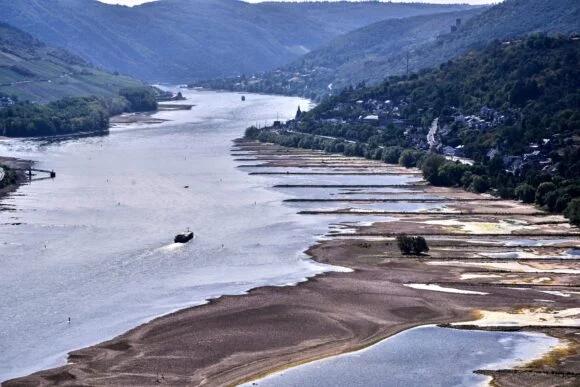
German industries are grappling with severe disruptions as water levels in the Rhine River reach unprecedented lows. Key sectors such as chemicals, utilities, and steel are raising alarms over rising logistical costs and decreasing production capabilities. The Rhine, known for its importance in the transport of goods, is experiencing a crisis that could have long-lasting effects on the economy and supply chains.
Logistical Challenges Intensify
The Rhine River serves as a crucial transport route for various goods, yet the declining water levels have led to increased freight costs and limited transportation options. Wolfgang Grosse Entrup, CEO of the German chemical industry association VCI, emphasized the precarious situation, noting, "Alarm bells are ringing loudly: the extremely low water levels are increasingly pushing logistics and supply chains to their limits." The implications of such disruptions extend beyond immediate cost increases; they threaten to unravel established supply chains that rely on consistent and predictable access to transportation routes.
Evonik, another major player in the chemical sector, has reported a reduction in cargo volumes affecting its Marl chemical site, though specific details about production scales were not disclosed. This lack of transparency can create ripple effects throughout the market, as suppliers and customers alike may struggle to plan for the future. Meanwhile, state energy provider Uniper pointed out that hydroelectric power generation at its plants has diminished, a trend echoed by regional competitor EnBW. With these challenges compounding, many companies are facing a dual crisis of logistics and production capacity.
Industry Perspectives and Transportation Shifts
Salzgitter, Germany's second-largest steelmaker, has been forced to rethink its coal transportation strategies, resulting in trains being used to transport coal from Rotterdam to its HKM division. "The current situation shows that we need greater attention to waterways as part of our critical transport infrastructure," remarked Tim-Oliver Mueller, head of the German Construction Industry Federation. He cautioned that the low water levels may persist, posing ongoing challenges to logistics. These adjustments may reveal deeper vulnerabilities in reliance on a single transportation method and expose the fragility of interconnected supply networks.
Katharina Stelzer, an executive at agricultural trader RWZ, described the situation as "catastrophic" as the company has significantly reduced its shipping volume. In typical years, RWZ moves upwards of 50,000 metric tons through its water terminals in Worms and Andernach during July and August. This year, however, it has managed to ship less than 10% of that volume, leading it to turn to more expensive truck transport options. The shift to truck transport introduces further complications, such as higher transportation costs and potential delays, both of which can exacerbate issues in getting goods to market.
"If Rhine levels do not recover in October, things will get really challenging for us," Stelzer concluded, highlighting the urgency of the situation. That sense of urgency is palpable across the industry. Companies are realizing they may need to invest in alternative transportation infrastructures, such as roads and railways, to mitigate the risks posed by climate fluctuation-induced disruptions.
Wider Implications for the Economy
As industries navigate these unprecedented challenges, the need for effective and resilient transport infrastructure becomes evident. The ongoing low water levels in the Rhine are not just a logistical concern; they signify a broader issue of sustainability and adaptation to climatic changes affecting Europe's critical waterways. This situation serves as a wake-up call regarding the future of transport in Europe, particularly in light of the increasing likelihood of extreme weather events.
In broader economic terms, the impact of these challenges could stretch across sectors, lowering productivity and increasing operational costs that may ultimately be passed on to consumers. If the transportation bottlenecks continue, companies might find themselves in a position where they are forced to reconsider investments and expansion plans. This isn't just about the immediate financial implications; it's a question of long-term market positioning.
The financial strain could also lead to consolidations in struggling sectors, as smaller companies might find it increasingly difficult to survive under such pressures. And, this is the part most people overlook: while larger companies may have the financial reserves to weather the storm, smaller businesses often do not, leaving them vulnerable to market volatility.
If you're working in this space, understanding the dynamics at play is critical. This scenario highlights the interconnectedness of logistics, production, and the environment—all factors that businesses can no longer afford to view in isolation. As climate change continues to pose challenges, the necessary conversations around adaptation and investment in infrastructure must happen sooner rather than later.
With the Rhine's fluctuating water levels as an illustration, this predicament may prompt a re-examination of how industries plan for future contingencies, ensuring they're not caught unprepared in a climate that remains unpredictably volatile.
Photograph: The Rhine with extremely low water levels is pictured in Bacharach, Germany, on Monday, Aug. 10, 2026. (AP Photo/Michael Probst)
Discussion
Sign in to join the discussion.