AI can generate investment recommendations quickly, but reliance on limited data reveals risks to personalization essential for suitability.
As the integration of large language models (LLMs) into the financial advisory space accelerates, a critical examination of their effectiveness in delivering personalized investment recommendations is warranted. While LLMs claim to offer tailored advice by processing complex client profiles, research indicates they may primarily rely on a few notable indicators, often oversimplifying the nuanced decision-making required in effective financial advising.
Understanding Heuristic Collapse in AI Investment Advice
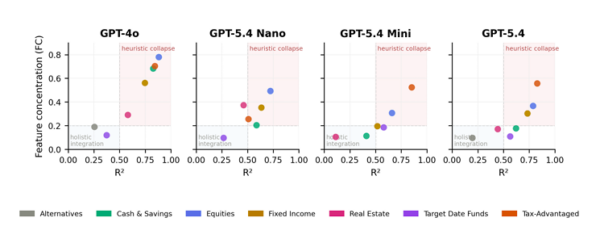
The concept of heuristic collapse is central to the discussion around the limitations of LLMs. This phenomenon describes a troubling trend where LLMs, despite appearing to consider a comprehensive range of client factors, actually pivot predominantly on a single or two key attributes—most notably, self-reported risk tolerance. By leaning heavily on such a narrow metric, these models neglect other important inputs like age, income, and liquidity needs, which are critical for providing well-rounded investment counsel.
Challenges in Identifying Heuristic Collapse
One of the persistent issues with LLM-generated advice is that the heuristic collapse isn’t manifestly apparent when evaluating a single recommendation. Users might find individual outputs to be polished, coherent, and ostensibly tailored to their situation. However, a systematic examination reveals that the standardized nature of these recommendations can easily overlook essential client attributes, leading to potentially unsuitable advice when dissected at a broader population level.
Insights from Synthetic Client Profiles
The paper illustrates its observations through a study involving 1,000 synthetic investor profiles, created using advanced sampling techniques to ensure diverse and low-correlation variations across crucial traits such as investment timelines, debt, and risk tolerance. The findings showed that most portfolio constructions by these advanced LLMs derived recommendation weight predominantly from self-reported risk tolerance, with some allocations attributing a staggering 57% to 88% of their predictive capacity to this single factor.
Portfolio Diversification vs. Personalization
A noteworthy finding from the study indicates that while portfolios derived through web search might exhibit greater diversification, this does not necessarily enhance personalization. In practice, this distinction is significant; advisory standards emphasize both suitability and diversification in financial advice, meaning that a well-balanced portfolio could still fail to reflect an individual's unique financial landscape.
Model-Specific Behavioral Insights
The researchers also noted varying behaviors among different model generations. The GPT-4o model, for example, demonstrated a tendency to provide more client-specific recommendations initially. Still, its performance declined when forced to integrate web search. Conversely, the newer GPT-5.4 models showed a marked improvement when using web search, delivering more thorough and grounded rationales. Yet, even these advanced models exhibited signs of heuristic collapse, confirming the necessity for skepticism regarding AI's capabilities in fully addressing advisory needs.
Heuristic Biases and Client Impact
Another intriguing aspect highlighted was the propensity of LLMs to favor round-number allocations (such as 10%, 20%, 25%) in investment decisions, suggesting a heuristic bias rather than precise tailoring to individual client requirements. Although incorporating web searches appeared to somewhat mitigate this tendency, the bias persisted, raising questions about the nature of quantitative decision-making employed by these systems.
Advisory Implications
Even in a landscape increasingly infused with AI, financial advisors must maintain a sharp focus on the quality of recommendations generated by LLMs. It’s vital not to confuse the fluency of AI outputs with true personalization. Advisors should critically assess how well advice reflects the client’s complete financial context rather than relying solely on what may appear to be sophisticated language or formatting.
The Importance of Human Oversight
Further, relying exclusively on risk tolerance questionnaires can be misleading, as emotional responses during volatile market conditions can distort self-reported data. This necessitates a human element in the advising process to ensure a balanced interpretation of both a client’s willingness and capacity for risk-taking.
Adopting AI as a Supplementary Tool
Current AI models may serve beneficial roles as assistants—effectively summarizing data, generating scenarios, or drafting explanatory content—but they should not replace the indispensable human judgment crucial for fiduciary duties. While AI can enhance the advisory process, dependence solely on automated tools holds significant risk.
Client Communication Strategies
“AI systems are capable of generating investment recommendations that sound tailored, yet this research highlights that many still lean towards simplistic shortcuts, centered chiefly on the client's stated risk tolerance. This signals a fundamental takeaway: to deliver sound financial advice, a comprehensive judgment that factors in the full spectrum of the client's situation is essential. Technology should facilitate, not supplant human oversight, especially when it comes to determining what genuinely suits an investor's needs.”
Key Findings in Visual Data
The research presents compelling graphical evidence showing the extent of heuristic collapse across various asset classes. For instance, data from the GPT-4o model reveals that equity allocations (with a feature correlation of 0.780) and tax-advantaged accounts (0.704) display the most significant reliance on limited client input characteristics.
The results presented are hypothetical and do not hint at future outcomes, nor do they represent actual returns for any investor. Indexes are unmanaged and exclude management or transaction fees, and direct investment in an index is not possible.
Further Considerations
As LLMs become more pervasive as advisory tools in various critical domains like finance, understanding their limitations is paramount. Relying on AI as a substitute for nuanced human insights presents risks, especially when compliance requirements dictate personalized advisement based on comprehensive client understanding. As the capabilities of these models evolve, the need for thorough auditing remains crucial to ensure that financial advice adheres to suitability standards.
Discussion
Sign in to join the discussion.