Samoa's fintech landscape hinges on remittances and mobile solutions that enhance financial inclusion while addressing challenges related to cash dependency.
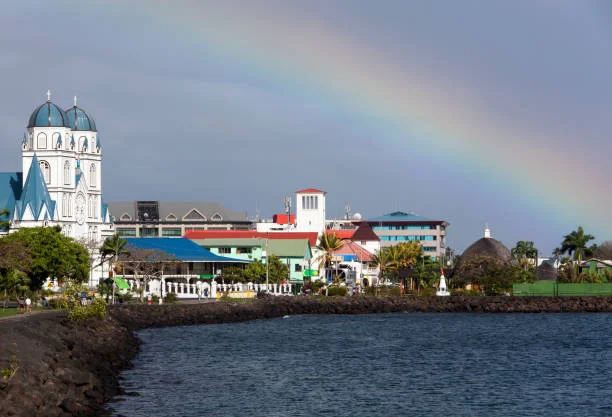
In Samoa, the pulse of fintech isn't solely about cutting-edge technology but rather about the critical lifeline of remittances sent from abroad. Whether it's a nurse in Auckland or a worker in California, the financial support these individuals send home plays a vital role in everyday life, enabling families to pay bills, buy food, and cover educational costs in remote villages across the islands of Upolu and Savai’i.
What truly underpins Samoa's evolving financial story is its diaspora, which has woven remittances into the fabric of economic activity. Traditional forms of transferring money have often been fraught with fees and logistical hurdles. However, the advent of digital financial services presents an opportunity to streamline these processes. The challenge remains: transforming sporadic remittance transactions into everyday financial interactions that residents engage with regularly.
Understanding Samoa's Economic Backdrop
Samoa's economy is multifaceted, with about 225,000 residents relying on sectors like tourism, agriculture, fisheries, and construction. Apia stands as the nation's financial and administrative hub, but access to banking services outside the capital can be limited. Institutions such as ANZ Bank Samoa and Samoa Commercial Bank provide essential services, yet geographical barriers present unique challenges. The cost of transport and the sparse population distribution complicate the establishment of conventional banking infrastructure across the islands.
Recent assessments by the International Monetary Fund (IMF) project a cautious recovery for Samoa's economy, driven by tourism and increasing local commerce. Still, underlying vulnerabilities to climate change and global economic fluctuations persist. While digital finance won’t eliminate these risks, it can enhance connectivity within the domestic economy and lower transaction costs.
The Significance of Remittances
Remittances act as lifeblood for many families, enabling them to meet daily expenses and fulfill community obligations. As reported by the IMF, about 80% of remittances continue through conventional money transfer operators, largely due to their speed and accessibility. However, the reliance on these services highlights a pressing need for resilient digital payment solutions as declining correspondent banks threaten these channels.
The shift to digital remittance technologies is thus essential. Not only do lower transfer fees put more money back into the hands of families, but integrating these payments into mobile wallets reduces the time and effort required to access funds. This efficiency not only keeps more money circulating within the Samoan economy but also empowers recipients by providing them direct access to their funds.
Mobile Telecommunications as Financial Catalysts
Interestingly, two of the most significant players in Samoa’s fintech scene are not traditional banks at all, but telecommunications companies. M-Tala, under Vodafone Samoa, enables users to send and receive money, buy airtime, and pay bills directly from their mobile wallets. It allows seamless integration with various international remittance services, fostering a more straightforward digital transfer experience.
MyCash, operated by Digicel Samoa, complements this financial ecosystem by providing a suite of services including real-time payments and bill settlements through its mobile app. Their recent partnership with Ria Money Transfer has further broadened MyCash's capabilities, allowing direct digital deposits from abroad into users’ wallets. This indicates how mobile networks can efficiently meet the needs of interconnected communities spread across Samoa’s diverse islands.
Challenges in Mobile Financial Adoption
Despite the growth in mobile money services, transitioning to a fully cashless economy remains a distant reality. The Central Bank of Samoa’s recent report indicates that while the registration for mobile money systems is on the rise, active usage lags behind, pointing to challenges in customer engagement. A decline in active agents further emphasizes the difficulty of sustaining a vibrant digital payment ecosystem beyond mere account openings.
To foster a deeper integration of mobile financial services into daily life, consumers need to see genuine benefits in regular transactions. Key requirements include merchant acceptance of mobile payments, reliable networks for cash exchanges, transparent pricing, and confidence in the availability of digital funds. The National Financial Inclusion Strategy II (2022–2026) underscores these necessities by advocating for improved digital literacy, infrastructure, and regional access to financial services.
Infrastructure Development as a Foundation for Growth
The establishment of the Samoa Automated Transfer System (SATS) represents a pivotal moment in modernizing the nation’s payment processing framework. This initiative aims to enhance the efficiency of transactions among financial institutions, setting the stage for increased financial inclusion and more efficient services. The efficiency of domestic payment systems is critical for fintech scalability; without swift and cohesive transaction capabilities, financial innovation may hit roadblocks.
Moreover, by embracing a regulatory sandbox approach, the Central Bank of Samoa has become more proactive in encouraging financial innovation. This includes initiatives where startups like PacWallex and products like the TickTap Card can be tested in controlled environments, paving the way for responsible and effective deployment of new technologies in the market.
Looking to the Future
For Samoa, the pathway to transforming its financial landscape lies not in amassing a multitude of fintech companies, but rather in selecting and refining a few reliable solutions. These key services need to address the pressing issues of remittance costs, financial accessibility outside of Apia, interoperability among various platforms, and the gradual reduction of cash reliance.
The momentum is building with platforms like M-Tala, MyCash, and supportive regulatory measures, laying the groundwork for a more resilient and inclusive financial ecosystem. The true measure of success for Samoa’s fintech evolution will be seen not through metrics of valuation, but through the tangible impact on everyday lives—essentially, how much more of every remittance can be utilized locally, and whether digital financial solutions can genuinely simplify and improve living standards across this geographically fragmented nation.
The post Samoa: Fintech Begins With Money Sent Home appeared first on The Fintech Times.
Discussion
Sign in to join the discussion.