Six Flags plans seat belts on Goliath and similar rides after a fatal ejection. Eight related coasters remain closed during safety reviews.
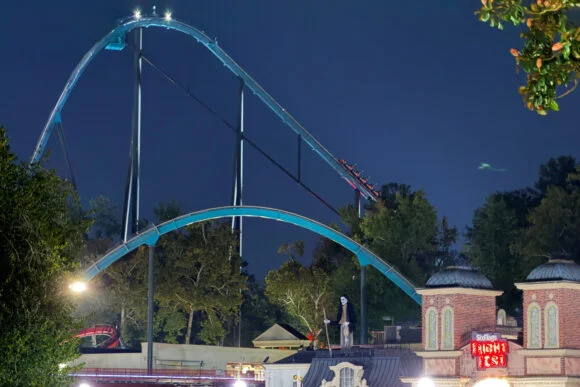
Six Flags is adding seat belts to Goliath and other roller coasters with similar restraints after a rider died on the Georgia ride. The decision extends the company’s response beyond the coaster involved in the Oct. 12 fatality: eight other rides at Six Flags parks in the U.S. and Canada are also temporarily closed. Taken together, the belt installations and closures point to a review of a shared restraint design, even though authorities haven’t said what caused the incident.
The fatal incident and the investigation
Hassan Jihad Ibn Kariem, 42, of Atlanta, was ejected from Goliath at Six Flags Over Georgia and died. The coaster remains closed while state and local officials investigate. Authorities haven’t identified a cause, so the available account leaves key questions unresolved: what happened during the ride, and whether the restraint or another factor contributed.
Some riders who used Goliath earlier that day said they had concerns about its restraints. Witnesses reported seeing Kariem rise from his seat before he fell back into the car and was ejected. Those accounts describe what people said they saw; they don’t establish why he moved or whether the restraint failed. The investigation will have to determine how those observations relate to the equipment and the sequence of events.
This distinction matters. A visible change in a rider’s position can prompt scrutiny of the restraint, but it doesn’t by itself explain the cause of a fatality. Until officials complete their work, the public record supports a cautious account rather than a definitive explanation.
“We are reinforcing safety precautions at our parks and taking additional measures, including adding seat belts on Goliath and other coasters with a similar restraint,” Six Flags Entertainment Corporation President and CEO John Reilly said in a statement Friday.
Reilly didn’t identify which other coasters will receive seat belts or say when the closed rides might reopen. The company has hired independent engineers and inspectors to review safety procedures across its parks. That review gives Six Flags a way to assess the equipment and operating practices, though the company hasn’t described its scope or said when its findings will be available.
Shared restraints, wider closures
The nine Six Flags coasters taken offline, including Goliath, were built by Swiss manufacturer Bolliger & Mabillard and use similar clamshell restraints. A vertical bar between a rider’s knees locks a padded restraint over the lap and upper legs. The similarity helps explain why the company’s response extends to multiple rides: a review can consider whether the same equipment warrants attention across different parks.
Adding belts is a concrete equipment change, but the company hasn’t said how it will decide which rides receive them or what the installation process involves. A restraint system is part of a larger ride operation, and safety reviews typically examine both equipment and procedures. Six Flags has said independent engineers and inspectors will review procedures, but it hasn’t given details about their work on the restraints themselves.
The closures span parks in Gurnee, Illinois; Jackson Township, New Jersey; Charlotte, North Carolina; Mason, Ohio; and Vaughan, Ontario. Six Flags hasn’t announced reopening dates. Each ride’s return depends on the company’s review and the relevant investigations, leaving guests and park operators without a public timetable.
This is more significant than it looks: the initial response affects rides that share a restraint style, not only the coaster where the death occurred. Yet a broader precaution shouldn’t be mistaken for a finding about the cause. That distinction will remain important as the company decides what changes to make.
Other parks and the questions ahead
The response reaches beyond Six Flags. SeaWorld Orlando in Florida and La Ronde in Montreal each temporarily closed a coaster with clamshell restraints after the death. SeaWorld’s Mako reopened Tuesday after a week offline. The Associated Press had asked SeaWorld whether it planned seat belts or other safety changes, and sought an update from La Ronde on its closed ride.
Those actions show that the incident has prompted attention at parks operating rides with a similar type of restraint. They don’t establish that the other coasters share the same problem, or that the same changes will follow. If you’re working in this space, the distinction between a precautionary closure and a confirmed equipment defect is central to understanding what the operators have—and haven’t—said.
Bolliger & Mabillard’s 2001 U.S. patent for the restraint system describes a design intended to make riders feel “that he is seated on a flying carpet or that he is at the controls of a kind of flying scooter, while still guaranteeing optimum security.” The language captures the design’s intended balance between sensation and restraint, but a patent description isn’t evidence about the circumstances of Kariem’s death. The investigation must address how the ride and restraint functioned in this specific case.
Here’s the thing: the next useful information will be concrete—what the engineering reviews find, which Six Flags rides will receive belts, and when the closed coasters can return. Until then, the company’s actions show a broad precautionary response, while the cause remains undetermined. And the central question remains open.
Top photo: The Goliath coaster at Six Flags in Austell, Georgia. (AP Photo/Emilie Megnien)
Discussion
Sign in to join the discussion.