Insurers across Europe are cutting back on coverage for climate-related damages, leaving homeowners and governments at higher financial risk.
Insurers in Europe are increasingly withdrawing from providing coverage for climate-related risks, effectively shifting the financial burden onto governments and homeowners, according to a report from the nonprofit organization Inside Track.
Rising Tide of Uninsurability
This trend comes alongside warnings from prominent industry figures. Aviva's CEO, Amanda Blanc, has highlighted an alarming reality: homes being constructed in the UK now face escalating flood risks that may render them uninsurable. Similarly, Allianz SE's Günther Thallinger remarked that “entire regions” could become uninsurable due to climate change's far-reaching repercussions.
This is more significant than it looks. The implications for homeowners and local economies are staggering, reflecting not just a market shift but a potentially devastating shift in personal and public financial responsibilities. With traditional insurance mechanisms faltering, the question arises: who will be left to foot the bill? Historical flooding events in the UK and Europe show that when homes become uninsurable, property values plummet, and local services can suffer due to reduced tax revenues. What does this mean for future development and urban planning? A crisis in insurability could reframe how cities prepare for climate impacts.
Insights from Industry Leaders
The Inside Track report, derived from insights of around 24 senior insurance professionals across the UK and Europe, suggests that this retreat is not only underway but expected to accelerate. The authors caution that this will lead to a significant rise in uninsured losses, which will ultimately get picked up by taxpayers or out-of-pocket homeowners when they face damages. That shift in risk assumption isn't just a financial concern; it could exacerbate social inequalities, as wealthier households may better absorb losses than those with fewer resources.
Concerns over the accurate pricing of risks have also surfaced. Lord Nicholas Stern, who chairs the Grantham Research Institute on Climate Change and the Environment at the London School of Economics, has noted that risk assessment models may have underestimated potential dangers. "The people who price risk for a living are warning that our models have missed the mark," he stated, underscoring that a nuanced risk environment is evolving rapidly. The reliance on outdated models leaves the insurance sector at risk of severe miscalculations, potentially leading to critical gaps in coverage just when it’s most needed.
Industry Response and Regulatory Framework
In light of this, an Association of British Insurers spokesperson emphasized the industry's commitment to understanding these risks through comprehensive analyses and assessments. The spokesperson reiterated that resilience against such challenges requires a collaborative effort involving governments, commercial sectors, and society at large. Yet, there remains skepticism about whether the current regulatory framework is sufficient to prompt meaningful change. If you're working in this space, consider that existing regulations must evolve to reflect these new realities rather than merely carrying over protocols designed for past crises.
While the insurance industry acknowledges these challenges, not all companies have been quick to adapt. Anthony Hobley, former deputy chair for climate risk and resilience at Howden Group Holdings, articulated that insurers typically limit their risk expertise to annually renewed policies. This approach fails to address the long-term nature of climate risks, leaving policyholders exposed in scenarios that await more than a year to unfold. As climate change accelerates, insurers must extend their focus beyond short-term policies.
Geographic Disparities in Coverage
Notably, property insurers have preemptively scaled back or outright canceled policies covering risks such as wildfires in California and hurricanes in states like Florida and Louisiana. In Europe, the situation is equally dire, with only about 25% of natural catastrophe losses currently insured. This discrepancy raises alarm bells within the European Insurance and Occupational Pensions Authority, which refers to it as a “new risk paradigm.” The Bank of England has previously pointed to this, citing insurers' inconsistency in valuing assets and liabilities concerning climate risks.
And this is the part most people overlook: while insurers are retreating, the risk of climate-related disasters isn't static. As weather patterns change, areas that were once deemed safe might become hotspots for claims. Predictive models often miss these shifting dynamics, leaving gaps in coverage just when communities need it the most.
Future Outlook and Implications
As the Inside Track report explains, the situation calls for urgent discourse and strategic action across the insurance industry, governments, and communities. The stakes are high; the lack of adequate coverage due to insurers withdrawing may force governments to step in financially, which could strain public resources. Should more regions become uninsurable, we may witness shifts not only in local economies but also in national housing policies and infrastructure planning.
In this transformation, the insurance sector must rethink its strategies, possibly embracing new models that account for long-term risks while ensuring fair pricing for homeowners. This calls for open dialogue between insurers, policyholders, and regulatory bodies—enabling a revised understanding of risk that reflects the ongoing climate crises.
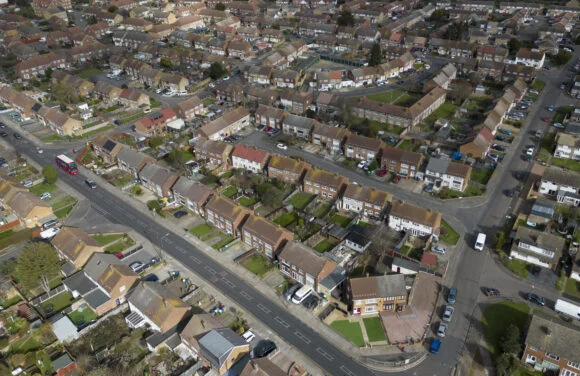
Photo: Houses in London. Photographer: Jason Alden/Bloomberg
Discussion
Sign in to join the discussion.