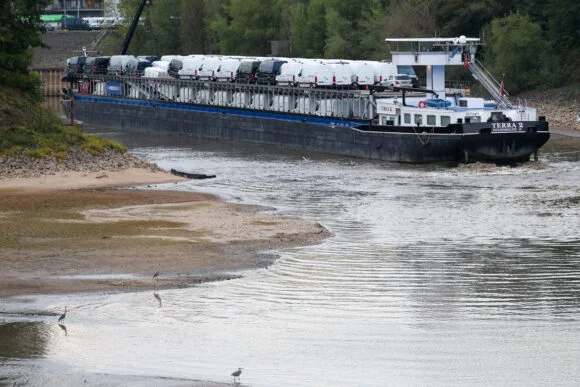
A vehicle-carrying vessel recently became immobilized in Düsseldorf amid record low Rhine River water levels, highlighting ongoing transport challenges.
Impact of Low Water Levels on Rhine Transport
A vessel transporting vehicles encountered difficulties at Düsseldorf harbor due to critically low water levels on the Rhine River, a key artery for European logistics. This incident reflects broader challenges stemming from extreme weather conditions this year, particularly drought and heat waves, that have significantly affected transportation routes. The Rhine, often referred to as the lifeblood of European trade, connects numerous industrial hubs and ports, facilitating the movement of goods across borders. When disruptions occur, the repercussions can resonate well beyond the immediate vicinity, illustrating the interconnectedness of global supply chains.
Details of the Incident
The vessel, identified as Terra 2, became stuck on September 28. Although this occurrence raised concerns, a Duisburg police spokesperson confirmed that river navigation remained unaffected during this period. Following prompt intervention, the ship was freed and has since resumed operations, unloading vehicles at a nearby facility and is slated to set sail again by Wednesday, according to representatives from Mosolf, the company that chartered the vessel. This swift resolution should anoint a sense of temporary relief for the logistics community, but it’s not a panacea for the challenges presented by ongoing weather conditions. It’s the reminder of their increasing frequency and severity that looms large.
Record Low Water Levels and Their Consequences
Currently, the Rhine's water levels are at historically low thresholds, affecting crucial freight transport from European factories to global markets. The river is integral for transporting commodities such as coal, oil products, and iron ore, and it services numerous key industries, including chemical production and steel manufacturing. When water levels drop, vessels must carry lighter loads, impacting overall cargo efficiency and forcing operators to rethink their logistics strategies. If you're working in this space, the implications for freight costs and scheduling could be significant, as businesses scramble to adapt.
Company Adaptations and Costs
With the river's diminished capacity, transportation costs have surged, compelling companies to pivot to alternative modes of transport. Some are resorting to using specialized vessels designed to navigate shallow waters, while others are increasing reliance on rail and road transport. This shift underscores the pressures businesses are facing in light of changing climate conditions. For many companies, it's not merely an adjustment; it's a complete operational overhaul. The costs associated with these changes—whether from more expensive transport modes or slower delivery times—can substantially affect profit margins. Stakeholders need to closely evaluate their strategies and consider where innovation might alleviate some of the current pressures.
Future Outlook for the Rhine
Expectations for the coming week indicate that warm, dry weather will persist, maintaining water levels at critical lows. However, weather forecasts and models from the German Federal Institute of Hydrology hint at a possible improvement following the first days of October, with rain potentially on the horizon. This situation will be closely monitored as businesses navigate the new climate realities influencing their logistics and operational strategies. The uncertainty surrounding weather patterns reinforces the notion that companies must remain agile and responsive. It’s a reminder that external factors often shape market dynamics in ways that businesses can't predict.
Implications and Future Considerations
This incident isn't just a minor hiccup; it highlights a significant issue facing river transport in Europe, especially amid increasing climate variability. Companies may find themselves needing to invest in technology that can mitigate these disruptions—think better weather tracking systems or adaptive freight solutions. Moreover, the regulatory landscape may evolve to address the challenges posed by climate change, affecting how companies operate in the long term. The stakes are high. Supply chain resilience is more than a buzzword; it’s becoming essential for survival. Companies that can’t adapt may struggle as climate inflict pressures become more pervasive.
Photograph: A cargo ship from the Netherlands, loaded with small vans, became stuck on the Rhine on Sept. 28, 2026; photo credit: Christoph Reichwein/picture alliance/Getty Images
Discussion
Sign in to join the discussion.