Sanchita Sultana emphasizes the essential role of clear communication in translating health evidence into actionable insights that truly benefit communities.
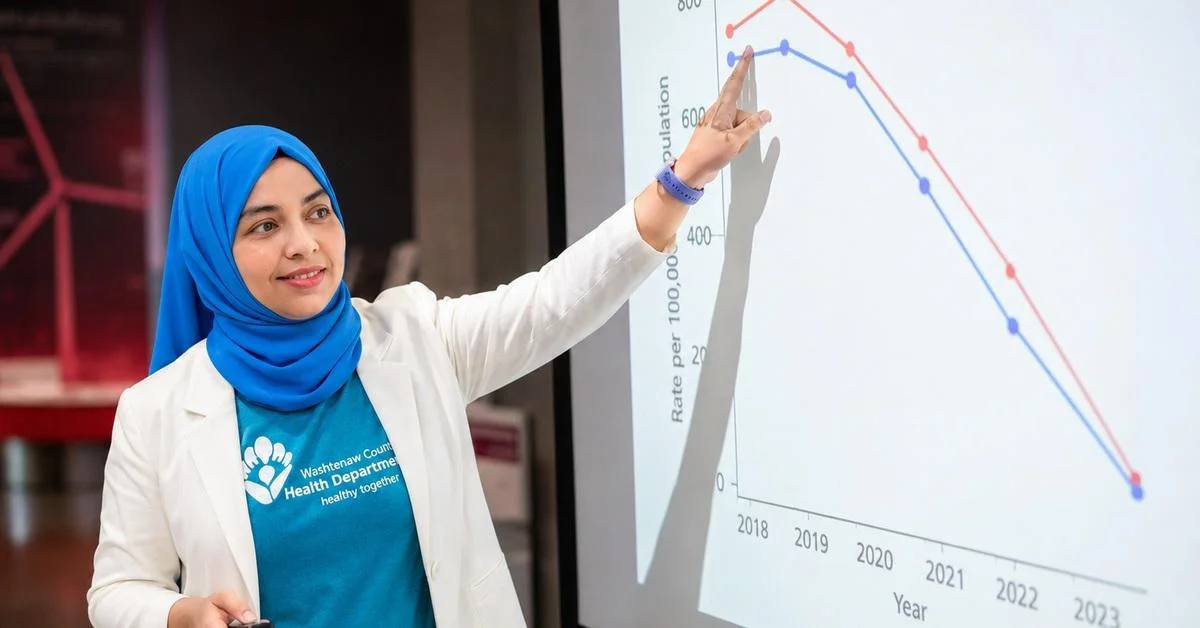
Sanchita Sultana's career as an epidemiologist is deeply influenced by her early experiences in Bangladesh, where she helped her grandmother understand a cancer diagnosis in a healthcare setting that lacked effective communication.
Years ago, Sultana found herself in a government hospital in a small town in Bangladesh, navigating a sensitive situation when medical professionals were unable to relay crucial information about her grandmother's illness. The medical staff’s language and time constraints prevented them from adequately explaining the diagnosis, leaving Sultana to bridge that gap. This formative experience not only highlighted a disconnect between medical professionals and patients but also emphasized the critical importance of effective communication in healthcare.
“I realized that mere availability of medical knowledge is insufficient,” Sultana reflects. “There’s often a significant gap between the healthcare system and the individuals who need clarity.” This insight has informed her approach to public health, crucially shaping her belief that understanding, access, and communication are indispensable components of effective healthcare.
The Role of Evidence in Public Health
Currently, Sultana’s focus encompasses epidemiology, implementation science, and population health research. She engages in analyzing health data, evaluating public health programs, and transforming scientific findings into practical recommendations. One area of her research is cancer screening, where she actively addresses the barriers that impede specific health initiatives.
Despite the varying subjects of her inquiry, Sultana recognizes a pervasive issue across her work: the challenge that evidence alone does not guarantee improved health outcomes. As she puts it, “In my early career, I believed that producing sound evidence would lead to better health decisions. Over time, I understand that evidence doesn’t translate into action on its own. It requires understanding, trust, and the ability to apply it within the realities faced by communities.”
Communication as a Public Health Imperative
That realization has fundamentally reshaped Sultana’s perspective on the role of an epidemiologist. While she acknowledges the necessity of producing rigorous scientific analyses, she stresses that public health professionals must also ensure that findings are communicated effectively to induce real-world impact.
“Strong evidence is just part of the equation,” Sultana explains. “Public health must also involve communicating this evidence in a way that is comprehensible to the affected communities.” This issue has gained urgency in an era dominated by rapid information dissemination and the proliferation of misinformation through digital platforms. Addressing these challenges, she points to the role of artificial intelligence in both innovating information sharing and complicating the landscape by rapidly spreading false claims.
The Challenge of Misinformation
For public health practitioners, the stakes are high. They must navigate a landscape where misinformation competes with credible science. This necessitates a dual approach: understanding the content of the evidence while also focusing on how to communicate it clearly and ensuring that community members can identify trustworthy sources.
“People are inundated with health information from numerous sources, and speed doesn’t equate to accuracy,” Sultana warns. “We cannot simply assume that the act of publishing evidence will guarantee public engagement or understanding.” This reality transforms trust from an abstract concept into a pragmatic public health challenge. Sultana emphasizes that fostering trust involves clear communication, active listening, and genuine collaboration with communities.
Future Directions for Public Health Professionals
Encouraging the next generation of public health professionals, Sultana highlights the importance of mastering both analytical skills and communication strategies. She believes that even the most compelling research will fall short if the relevant individuals are detached from the information it provides.
“Sophisticated analyses are fruitless if the communities impacted do not feel engaged in the process,” she asserts. “Public health's mission is ultimately service-oriented. Understanding the nuances of the problem is crucial, but we must not lose sight of those living with its consequences.”
Her own research endeavors have reinforced these convictions. Sultana has authored numerous peer-reviewed publications and has actively participated in discussions at significant public health conferences, contributing her insights on the necessity of clarity and public involvement in health communication.
Trust and Its Implications
This perspective informs her understanding of public trust in science. While scientific knowledge can adapt swiftly, public perceptions may lag behind. In an age where health misinformation spreads rapidly, the burden lies on public health professionals to communicate effectively, listen to community concerns, and distill complex information into actionable insights.
"Trust doesn't emerge automatically, even with robust scientific evidence," she states. "Public health needs to earn trust through clear communication and by being responsive to community needs." Sultana’s journey – from a personal experience in Bangladesh to her current role in public health – serves as a poignant reminder of the critical intersection between research, communication, and community engagement.
“I often reflect on that initial distance I confronted,” she concludes. “Evidence provides a solid foundation, but lasting impacts depend on whether the public can resonate with, trust, and utilize that information. The quest for better public health communication must continue tirelessly.”
Discussion
Sign in to join the discussion.