Homeowners accuse the Texas Windstorm Insurance Association of fraudulently manipulating claims after Hurricane Beryl, seeking class action under RICO.
Three homeowners in Texas have initiated a federal racketeering lawsuit against the Texas Windstorm Insurance Association (TWIA), alleging that the organization fraudulently reduced claim estimates related to damages from Hurricane Beryl. The complaint, filed in the U.S. District Court for the Southern District of Texas, accuses TWIA of colluding with a vendor to alter original claims estimates, misleading policyholders by presenting the revised figures as legitimate.
Allegations of Misconduct
The plaintiffs assert that they collectively lost significant amounts of money as a result of this alleged fraud, with one homeowner's claim dropping from an initial estimate of $91,000 to a mere $31,000—a staggering cut of 66%. Such reductions raise serious questions not only about TWIA's claims adjustment practices but also about the broader ethical standards within the insurance industry. This drastic alteration in claim values is alarming and leads to a crucial point: how many more policyholders may be facing similar situations without even realizing it?
They argue that such drastic reductions were not only deceptive but also financially devastating. The emotional toll on homeowners dealing with the aftermath of a hurricane—when they often feel most vulnerable—could be exacerbated by the feeling of betrayal in having their claims manipulated. Lack of transparency in such dealings can contribute to a climate of fear and distrust, affecting not only the plaintiffs but also countless others who hold similar policies.
The Legal Framework
The lawsuit specifically cites the federal RICO (Racketeer Influenced and Corrupt Organizations) Act, claiming that TWIA's practices constitute a pattern of racketeering. This aspect of the lawsuit raises the stakes considerably, as RICO suits are notoriously difficult to win, making the allegations here particularly alarming. Importantly, the plaintiffs do not base their RICO claims on any violations of Texas insurance law, which is a notable aspect of this case. If the courts take these allegations seriously, it can set a precedent, allowing policyholders to hold insurance companies accountable beyond state regulations.
Claims Processing Under Scrutiny
Hurricane Beryl made landfall on July 8, 2024, as a Category 1 storm, leading to about $336 million in claims payments to approximately 34,000 TWIA policyholders. Given the scale of the storm's impact, TWIA employed standard industry practices by hiring temporary staff, contractors, and vendors to manage the claims load efficiently. However, the allegations suggest that in the rush to process claims, ethical boundaries may have been crossed, resulting in manipulated estimates rather than legitimate adjustments based on losses incurred.
The complaint alleges that TWIA employed Leading Edge Claims Service, now operating as Hansen, to handle field adjusting and related services. It claims that an Ohio-based supervisor from Leading Edge would take control of estimates prepared by field adjusters and subsequently lower the figures without proper justification, all while presenting these revisions as the adjusters' original estimates. This manipulation is concerning because it indicates a potentially systemic issue within TWIA's claims handling practices—even in the midst of a crisis, profit margins seemed prioritized over fair treatment of policyholders.
This manipulation allowed TWIA to calculate benefits based on the lowered estimates, which were then processed in a manner that obscured the modifications from the affected policyholders. (And this is the part most people overlook.) The impact of such hidden adjustments could lead to widespread discontent within the policyholder community, as trust erodes and individuals feel less secure in their financial safety nets.
Failure of Internal Controls
According to the plaintiffs, internal audit trails available within TWIA's systems that should have flagged these discrepancies were overlooked, suggesting gross negligence at higher levels within the organization. This oversight could signify a need for a reevaluation of internal controls in insurance organizations. After all, if those responsible for ensuring compliance and ethical conduct fail to do so, it raises questions about the whole operational framework of these companies.
In terms of remedies, the lawsuit seeks actual damages alongside treble damages, significantly amplifying the potential financial repercussions for TWIA. Such a demand reflects the seriousness of the plaintiffs’ grievances but also serves to highlight an industry-wide issue: the looming threat of legal ramifications may force insurance companies to rethink their claims procedures and customer service protocols.
Tensions and Industry Implications
Aaron Taylor, a spokesperson for TWIA, declined to comment on the specifics of the lawsuit, affirming that TWIA's claim adjustment procedures are compliant with applicable Texas and federal laws. This statement underscores the tension between TWIA's public position and the allegations raised by the plaintiffs. If you're working in this space, this kind of pushback could be a critical moment that sparks changes in how insurance firms navigate their claims processes, particularly in high-stakes scenarios involving natural disasters.
Looking Ahead: Potential Outcomes
As the situation unfolds, the industry will be keeping a close watch on how this lawsuit progresses, particularly in light of increasing scrutiny on insurance companies following significant natural disasters like Hurricane Beryl. The outcome could have substantial implications for the practices employed not only by TWIA but potentially across the broader insurance sector in disaster response. With greater regulatory scrutiny and the potential for increased litigation, companies may soon face higher stakes when dealing with claims adjustments.
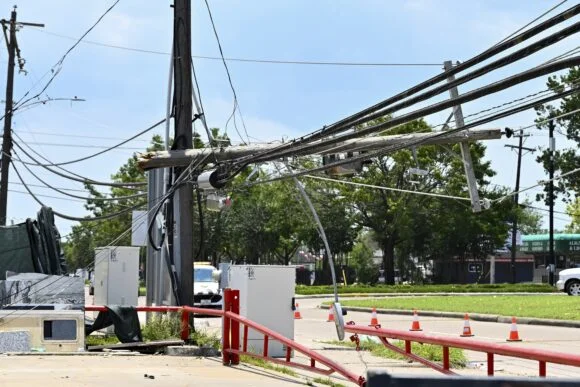
Photo: A utility pole damaged by Hurricane Beryl awaits repairs in Houston on July 10, 2024. Such storms are becoming increasingly frequent and intense, prompting insurers to revise their risk assessments and pricing structures. (AP Photo/Maria Lysaker)
Discussion
Sign in to join the discussion.