Ray Dolby's innovation in sound transformed filmmaking; today's investors should note the critical role of infrastructure providers in tech sectors like AI.
A Billion Dollar Business Model: Lessons for Investors
This story epitomizes how lucrative opportunities can lie in unexpected places.
Meet Ray Dolby — a figure synonymous with the film industry yet never having donned the director’s hat or held a script in his hands. Instead of creating films, his groundbreaking technological advancements made movies exponentially more engaging.
Dolby’s journey began in the 1960s when he identified a pervasive issue in recorded sound. The audio tapes used by studios produced a frustrating background hiss, which detracted from the viewer's experience. Unsatisfied by this sonic imperfection, Dolby, an accomplished electrical engineer, devised a solution that significantly enhanced sound quality. However, this was just the beginning.
His company introduced a revolutionary surround sound technology that enveloped theater-goers in an immersive audio experience. Explosions felt real; the roar of car engines echoed around the auditorium. This Dolby Surround Sound fundamentally reshaped filmmaking and audience engagement.
Remember, by the late 1970s, around 6,000 theaters had adopted Dolby’s innovations. He wasn’t the one crafting the cinematic narratives, yet his contributions were vital — helping filmmakers elevate their storytelling through sound. As a result, Dolby amassed a fortune, becoming a billionaire and having his name immortalized; the venue for the Academy Awards now bears his name.
Dolby’s story serves as a poignant reminder that creating the end product is not the only path to wealth. Often, providing critical components is the more astute strategy.
Now, let’s bring this back to the present and examine how this model applies today, especially with Elon Musk potentially gearing up for one of his most ambitious projects yet.
Navigating the AI Infrastructure Landscape
If you’re closely following advancements in AI, investor Luke Lango has been vocal about exploring the sector beyond just the headline-grabbing companies. His insights reveal an essential truth: even in booming industries, the infrastructure providers play an indispensable role that investors often overlook.
In a past issue of Innovation Investor, Lango recommended Dycom Industries (DY). This company holds a dominant position in the design and maintenance of telecommunications infrastructures across the United States. When major telecommunications companies need to expand their fiber networks, Dycom is the go-to.
Dycom is the dominant player in the design, installation, and maintenance of telecommunications infrastructure across the United States. When AT&T decides it needs to densify its fiber network in the Southeast, it calls Dycom.
The relationship between Dycom’s operations and the burgeoning AI sector is undeniable. Every interaction with AI — be it a ChatGPT inquiry or a machine-learning task — relies on robust fiber connectivity. This reliance positions Dycom in a pivotal role parallel to its well-known clients.
While the broader market has experienced fluctuations, Dycom's stock has seen a 12% increase since Lango's recommendation in April, a testament to the upside of pursuing less obvious investment avenues.
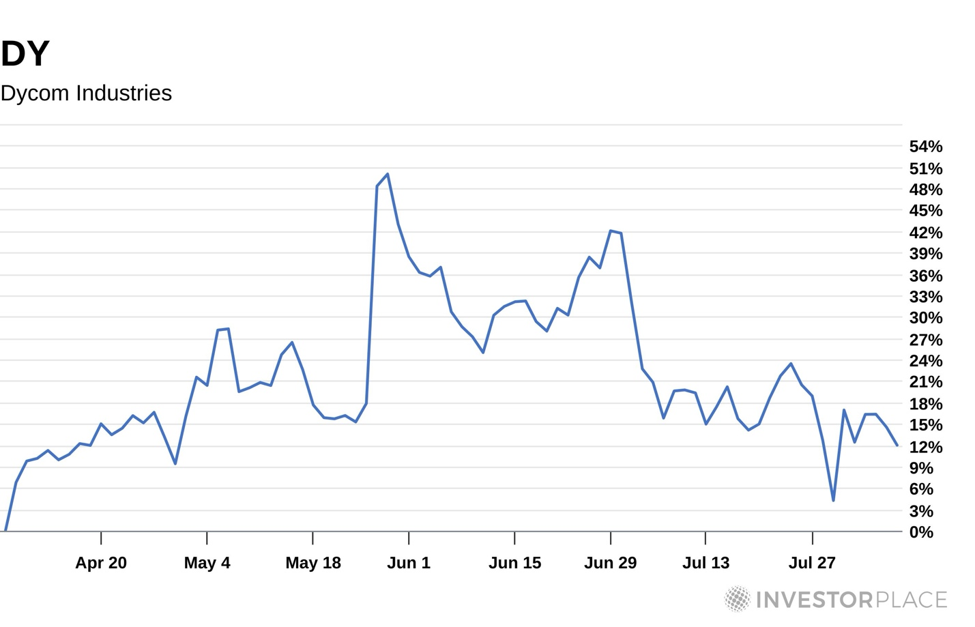
Currently trading around $400, Dycom sits comfortably below the $500 buy limit Lango has set, indicating a strategic entry point for investors interested in establishing a position in a company instrumental to AI's success.
Lango has additional insights, having identified other lesser-known suppliers that might be essential as Musk embarks on what could be his most ambitious endeavor to date.
Elon Musk's Vision for the Future
This project might surpass any previous undertakings Musk has pursued throughout his ventures. Envision what could unfold as he integrates the strengths of Tesla (TSLA), SpaceX (SPCX), and xAI. Imagine massive AI data centers established in orbit, expansive semiconductor facilities sprouting up in Texas, and fleets of Optimus robots set to revolutionize efficiencies.
Pulling this off won’t be easy. Musk’s enterprises will require a vast array of specialized machinery, materials, and components, many of which they cannot produce in-house from the get-go.
This is the crucial moment when suppliers stand to gain — just like Dolby's technology, which was indispensable to the filmmaking process. Lango remains vigilant for companies set to provide much-needed infrastructure and equipment that will be instrumental for Musk's grand designs.
Beneath the surface, these suppliers could turn out to be invaluable assets, soaring in market value even while operating in the shadows of more prominent brands. It’s in recognizing these opportunities that one can truly capitalize on the industry’s evolution.
In a recent presentation, Lango lays out his findings on three companies poised to thrive from Musk's ambitious plans. He aims to enlighten investors before these companies become known household names.
The rise of Dycom highlights the potential benefits of identifying and investing in companies that furnish the necessary tools, even when those names aren’t splashed across every headline. After all, Ray Dolby didn’t make the movies; he made their sound unforgettable.
For those looking to grasp Elon Musk's next big project and the invaluable suppliers driving it, watch Lango’s revealing presentation to discover those potentially lucrative opportunities.
Best wishes to everyone in their investing pursuits,
Luis Hernandez
Editor in Chief, InvestorPlace
Discussion
Sign in to join the discussion.